
Strategies in Indonesia
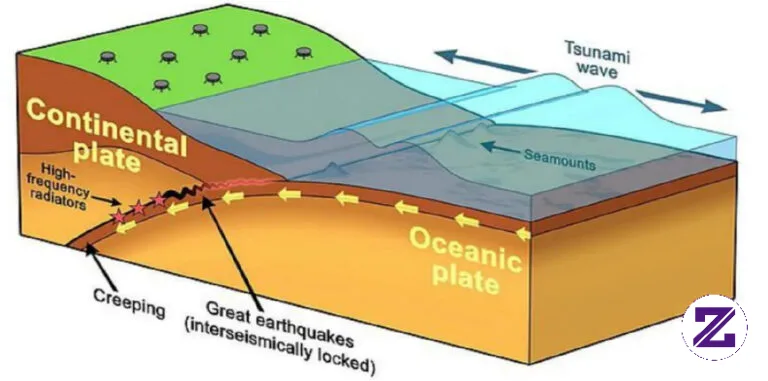
A megathrust earthquake is a catastrophic seismic event occurring along subduction zones, where a dense oceanic plate slides beneath an overriding continental plate. These tectonic interactions produce some of the most powerful earthquakes globally, with magnitudes ranging from 8.0 to 9.0. Due to significant vertical seafloor displacement, megathrust events frequently generate massive tsunamis capable of devastating coastal regions shortly after the initial shock. Positioned directly over the Pacific Ring of Fire, Indonesia is circumscribed by active subduction zones such as the Sunda and Banda Arcs. The rapid convergence of the Indo-Australian Plate—moving at 5 to 7 centimeters annually—combined with complex fault systems, establishes Indonesia as a high-risk zone for major seismic activity.
The mechanical process of a megathrust earthquake begins when subducting plates become frictionally locked over a broad fault interface. As the subducting slab continues its downward movement, elastic stress continuously accumulates within the locked zone over decades or centuries. When the accumulated tectonic stress finally overcomes the static frictional resistance, an abrupt slip occurs. This violent release of energy generates powerful seismic waves and forces the overlying sea floor upward, displacing enormous volumes of seawater and triggering widespread tsunami waves across oceanic basins. Indonesia’s historical seismic record—highlighted by the 2004 Indian Ocean Tsunami, the 2007 Bengkulu Earthquake, and the 2010 Mentawai Event—underscores the destructive potential of these subduction zone ruptures.
Mitigating the severe risks posed by megathrust events requires a multi-layered disaster management framework combining technology, structural engineering, and public preparedness. Critical technical measures include operating real-time monitoring systems like the Indonesia Tsunami Early Warning System (InaTEWS), updating land-use zoning based on seismic hazard mapping, and enforcing strict structural building codes under SNI 1726:2019. Complementing technical safeguards, public education, routine evacuation drills across residential and industrial sectors, and emergency kit readiness form the foundation for minimizing casualties and enhancing community resilience against future earthquake events.