
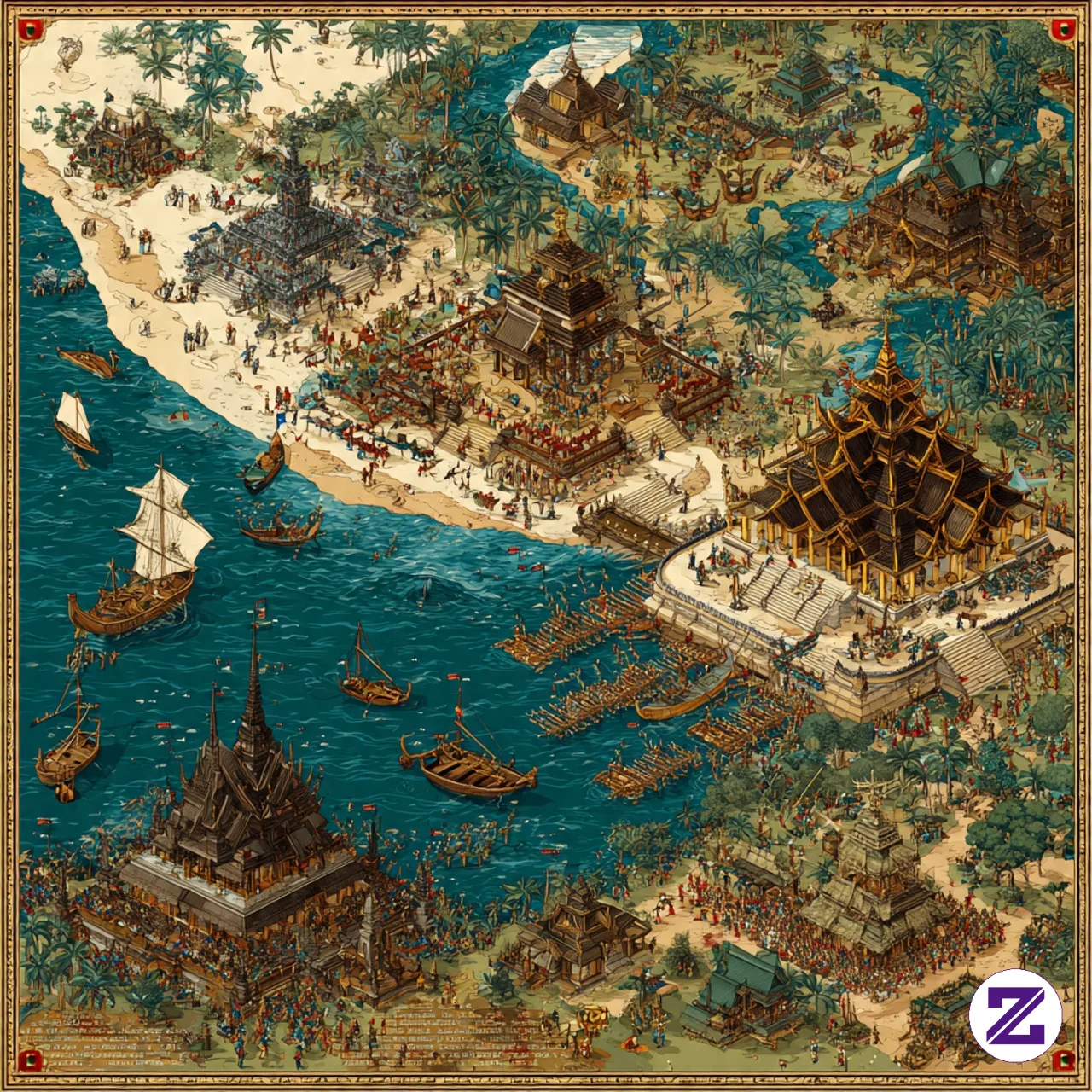
The collapse of the Majapahit Kingdom was not caused by just one event. After reaching a period of glory, especially during the Hayam Wuruk era with the support of Gajah Mada, Majapahit faced various political and internal problems which slowly weakened the kingdom's power.
One important problem is the conflict over power within the kingdom. After Hayam Wuruk died in 1389, there was a dispute over succession. Conflicts such as the Paregreg War in the early 15th century showed how internal strife could drain Majapahit's political power and resources.
Apart from internal problems, Majapahit rule also faced changes in political and economic conditions in the archipelago. Several areas that were previously under the influence of Majapahit increasingly have space to stand on their own. At the same time, the development of maritime trade networks made new centers of power increasingly important.
Political changes in Java also influenced Majapahit's position. The emergence of Islamic powers in a number of coastal areas, including the development of the Demak Sultanate at the end of the Majapahit period, was part of changes in the political and economic landscape. However, the process of weakening Majapahit took place gradually and cannot be explained simply by the emergence of a new kingdom.
So, it is more accurate to say that Majapahit's decline was the result of a combination of internal conflict, succession problems, weakening control over territory, and changes in political and trade networks. After its heyday, Majapahit's power diminished until it was no longer the main power in Java.