

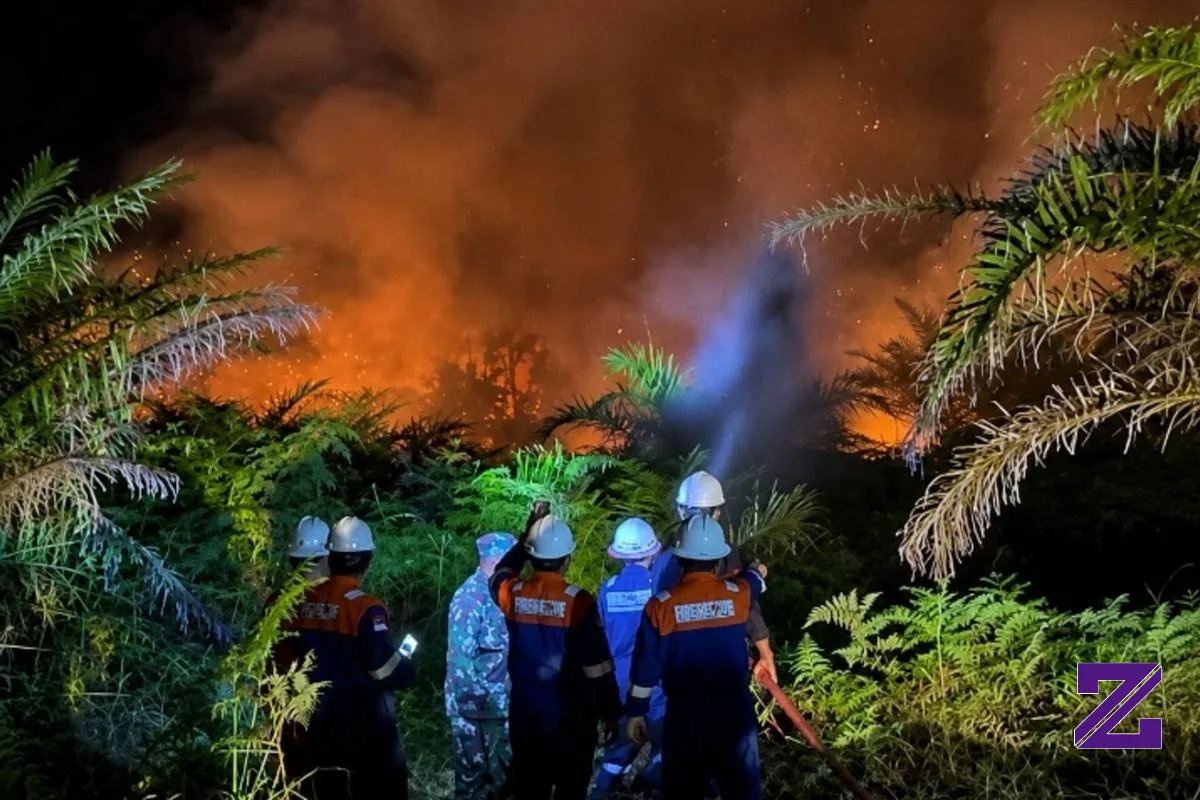
A forest and land fire in Dayun District, Siak Regency, Riau, has spread into the protected area of Zamrud National Park. The incident has raised concerns because the area contains peatland ecosystems that are particularly vulnerable to fires during the dry season.
The fire reportedly reached approximately 100 meters inside the national park. It initially developed in land surrounding the park's boundary before spreading into the conservation area.
Ujang Holisudin, Head of the Technical Division at the Riau Natural Resources Conservation Agency, said the fire entering Zamrud National Park had been identified several days earlier.
Dry vegetation and peatland conditions contributed to the spread of the flames. Fires in peat areas can be particularly difficult to control because dry conditions allow them to spread and smolder beneath the surface, while strong winds can accelerate their movement.
A joint team involving the military, police, disaster management authorities, local government, and companies operating near the affected area has been deployed to handle the situation.
Firefighting operations are being carried out both from the ground and from the air. In locations that are difficult to reach, crews have also established firebreaks to slow or stop the fire from spreading farther into the conservation area.
Authorities are not only targeting visible flames but are also working to prevent new hotspots from emerging. Remaining embers can reignite under dry conditions and potentially cause the fire to spread again.
Siak Regent Afni Z said the situation has become considerably more manageable. According to her, the fire has been extinguished and the response has now shifted toward cooling operations.
Around 300 personnel remain deployed to check the affected areas and make sure no remaining embers could trigger another fire. The response is being conducted through coordination among multiple agencies.
The spread of the fire into Zamrud National Park highlights the difficulty of containing fires in peatland areas. Even when the main flames are brought under control, continued monitoring and cooling are essential to protect the conservation area from renewed fires.