
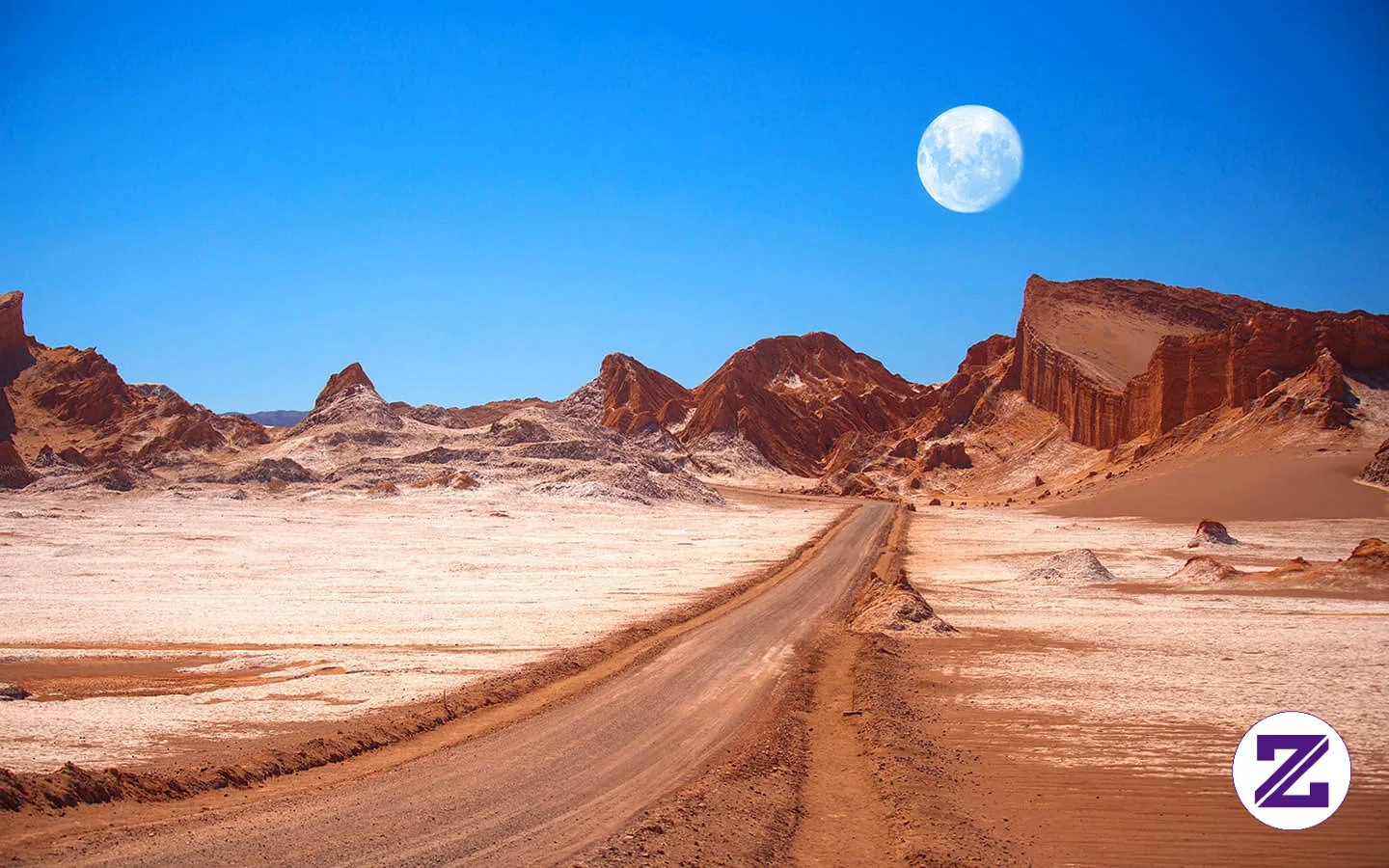
Scientists generally consider the Atacama Desert in northern Chile, South America, to be the driest non-polar place on Earth. Weather stations in certain parts of the Atacama have recorded multi-century stretches without a single drop of rainfall. The average annual precipitation across the desert ranges from a razor-thin 1 to 15 millimeters per year, creating an arid, sterile landscape so extreme that it is frequently compared to the surface of Mars.
The Atacama's hyper-aridity is driven by a geographic phenomenon known as a double rain shadow. The desert sits trapped between two high mountain barriers: the Andes Mountains to the east and the Chilean Coast Range to the west. Moisture-laden air from the Amazon Basin is blocked by the Andes, while the cold Humboldt Current off the Pacific coast prevents atmospheric convection and cloud formation from the west.
While the Atacama holds the record for non-polar deserts, the absolute driest place on Earth scientifically is the McMurdo Dry Valleys in Antarctica. Researchers estimate that parts of these hyper-arid valleys haven't seen rain or liquid water for nearly two million years.
The McMurdo Dry Valleys remain completely free of snow and ice due to intense katabatic winds. These powerful gravity-driven winds rush down from the surrounding mountains at speeds reaching 320 kilometers per hour, generating heat that evaporates all ambient moisture, ice, and snow before it reaches the valley floor. This leaves behind a barren, frozen desert of exposed rock.
Hyper-arid sites like the Atacama Desert and the McMurdo Dry Valleys are invaluable testing grounds for scientific research. Space agencies like NASA frequently use these desolate environments to test Mars rovers and life-detection equipment due to their extreme dryness and environmental similarities to the Red Planet.