
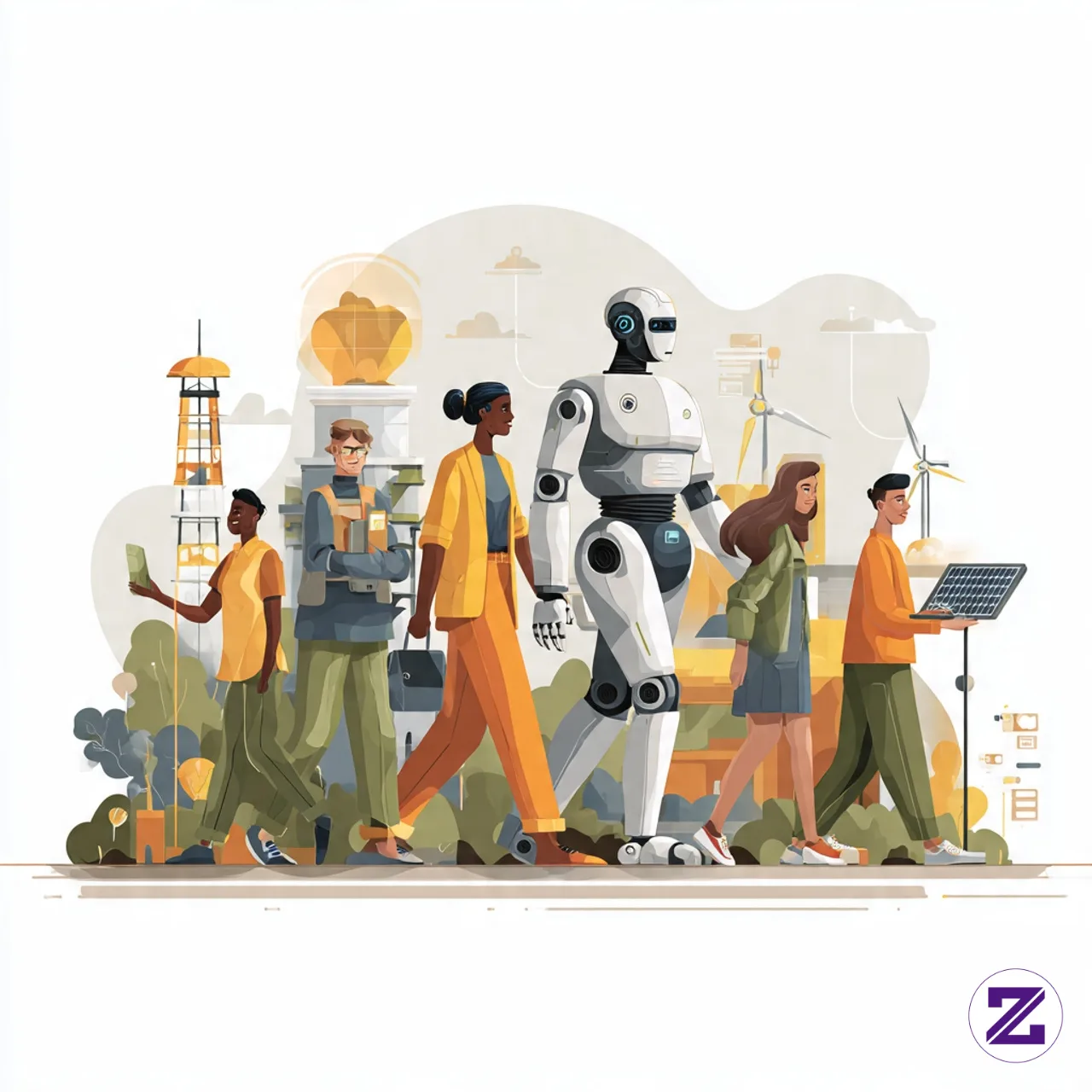
The transformation of the job market driven by Artificial Intelligence over the next five years is less about replacing humans entirely and more about fundamentally redefining how work gets done. The most immediate disruption is happening across routine, administrative, and basic data-analysis roles that AI models can now complete in seconds. However, this shift simultaneously creates an array of new positions focused on AI ethics oversight, system integration, and specialized roles designed to manage these smart technologies.
This structural shift naturally alters the core skillset demanded by global industries. Basic technical abilities, such as elementary coding or standardized content creation, are seeing their market value drop rapidly. Instead, organizations increasingly prioritize adaptability, critical thinking, complex problem-solving, and emotional intelligence. The professionals who will thrive are those who treat AI as a collaborative co-pilot rather than an existential threat to be avoided.
Furthermore, AI adoption is driving massive organizational restructuring across corporate sectors. Companies are leaning toward leaner, high-output teams where tasks that previously required large departments can now be handled by a few specialists utilizing automation tools. This dynamic demands continuous national reskilling and upskilling initiatives to prevent structural unemployment within vulnerable workforce sectors.
The gig economy and freelance landscapes will also see accelerated expansion as AI access becomes democratized. Powerful digital tools allow individual freelancers to operate with the productivity of small agencies, blurrring the traditional boundaries between corporate employment and independent work. The tradeoff is an increasingly competitive global marketplace, where the baseline expectation for quality has risen across every industry.
Ultimately, AI is not simply eliminating jobs; it is shifting where human value resides. The workforce of the future demands a hybrid model of strong digital literacy alongside uniquely human capabilities that algorithms cannot replicate. Educational institutions and governments that adapt quickly will build resilient workforces, while those that lag behind risk widening economic disparities.