
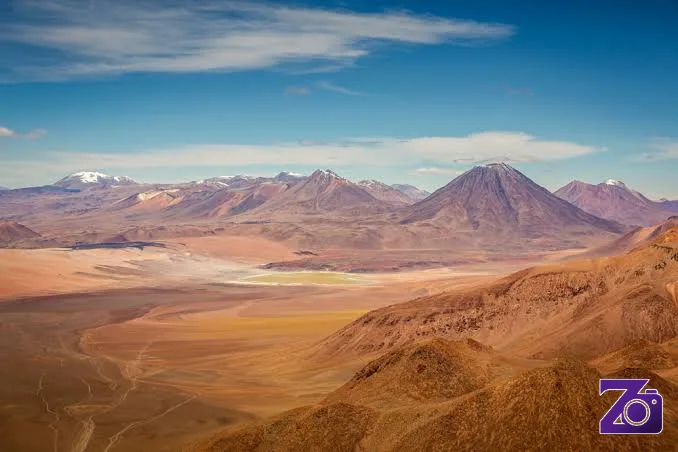
Chile's Atacama Desert is known as one of the driest places on Earth. Its extremely barren conditions make parts of the region useful for studying how life can survive in harsh environments.
Some areas of the Atacama receive extremely little rainfall. The soil can also be poor in organic material and highly challenging for living organisms, making the region valuable for astrobiology research.
These conditions share certain similarities with the Martian environment, particularly extreme dryness and limited resources. Researchers can therefore test instruments and methods designed to search for signs of life in extreme environments.
Atacama is not actually the same as Mars. Mars has a much thinner atmosphere, different temperatures, and radiation and chemical conditions that are not identical to those on Earth.
Those differences are part of what makes the desert useful for research. Scientists can test technologies and life-detection methods in an extreme Earth environment before applying them to space missions.
So when researchers study this exceptionally dry desert, they are not simply studying a desert. Atacama also serves as a natural laboratory for understanding the limits of life and how scientists might search for evidence of life on other worlds.