
Saving vs Investing: Key Differences Explained
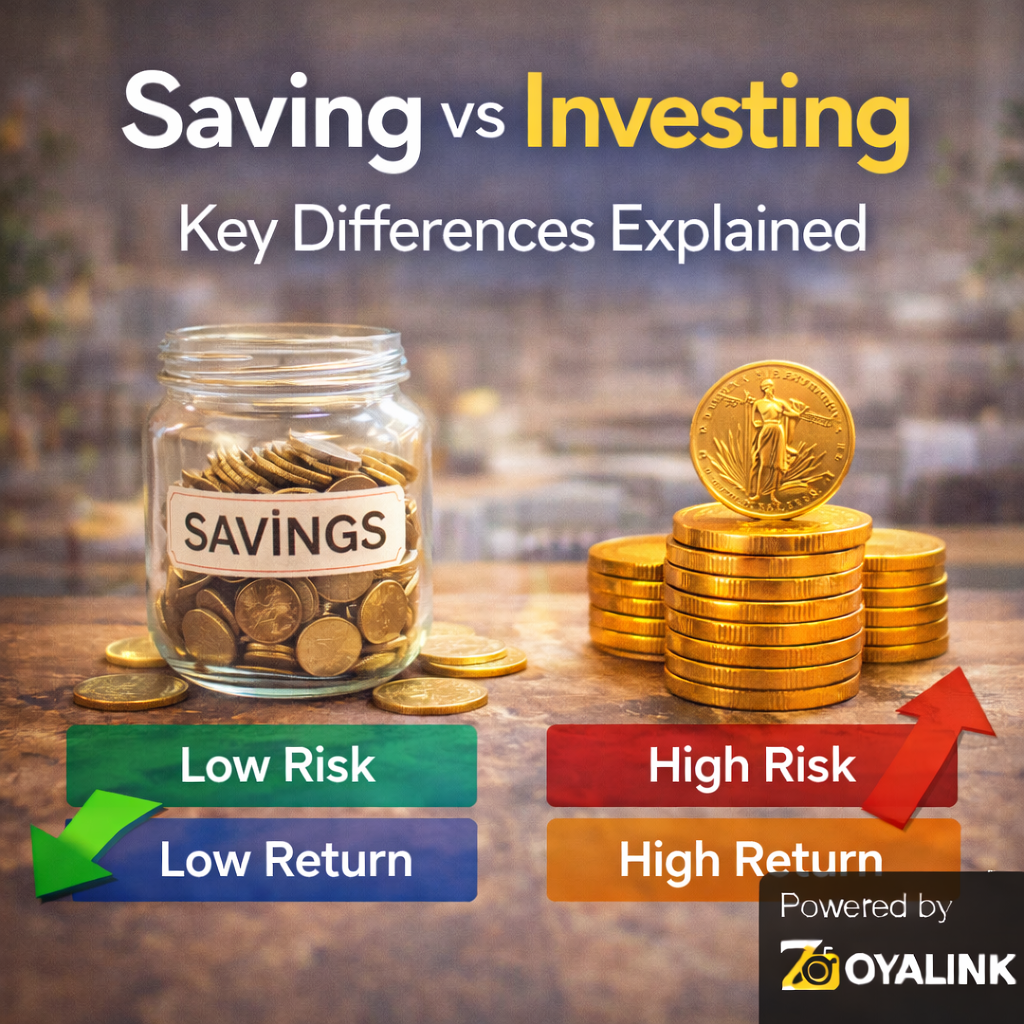 and how to use both for better financial planning.">
Saving vs Investing: Key Differences Explained
Saving and investing are two fundamental financial concepts that are often confused. While both are important for financial stability, they serve very different purposes.
Understanding the difference between saving and investing helps individuals make smarter financial decisions and plan for both short-term and long-term goals.
What Is Saving?
Saving means setting aside money in a safe place for future use. Savings are usually kept in bank accounts or other low-risk instruments.
The main goal of saving is security and accessibility.
Characteristics of Saving
- Low risk
- Easy access to funds
- Suitable for short-term goals
- Low returns
What Is Investing?
Investing means placing money into assets with the expectation of generating profit over time.
Investments can grow faster than savings but also come with higher risk.
Characteristics of Investing
- Higher potential returns
- Higher risk
- Suitable for long-term goals
- Value can fluctuate
Main Differences Between Saving and Investing
| Aspect | Saving | Investing |
|---|---|---|
| Risk Level | Very Low | Medium to High |
| Return | Low | Potentially High |
| Time Horizon | Short-term | Long-term |
| Liquidity | High | Varies |
When Should You Save?
Saving is best for emergency funds, daily expenses, and short-term financial needs.
It provides peace of mind and financial security.
When Should You Invest?
Investing is ideal for long-term goals such as retirement, education, or wealth growth.
It requires patience, discipline, and risk management.
Combining Saving and Investing
The best financial strategy is not choosing one over the other, but combining both.
Savings protect you from emergencies, while investments help grow wealth.
Modern Financial Planning
In today’s digital era, many individuals also combine traditional saving and investing with digital income sources.
Flexible monetization platforms can help generate additional cash flow to support both savings and investments.
Conclusion
Saving and investing serve different but complementary purposes.
Understanding when and how to use each one helps build a healthier and more sustainable financial future.