How Facebook Monetization Works and How It Compares to ZOYALINK
How Facebook Monetization Works and How It Compares to ZOYALINK
Facebook is one of the most popular platforms for content creators who want to earn money online. With features like ads, in-stream monetization, and bonuses, Facebook offers multiple ways to generate income. However, monetization on Facebook comes with specific requirements and limitations.
Understanding how Facebook monetization works—and how it compares to creator-focused platforms like ZOYALINK—is essential for building a stable and long-term income strategy.
How Facebook Monetization Works
Facebook monetization allows creators to earn money primarily through advertising and performance-based programs. These systems are deeply connected to Facebook’s algorithm and platform policies.
Main Facebook Monetization Methods
- In-stream ads on videos
- Ads on Reels
- Performance-based bonuses
- Fan subscriptions and stars
Each method has eligibility requirements, such as minimum followers, watch time, content guidelines, and account standing.
Requirements for Facebook Monetization
To monetize content on Facebook, creators must meet strict criteria. These typically include:
- Minimum follower count
- Minimum watch hours
- Compliance with monetization policies
- Consistent content performance
Creators who fail to meet or maintain these requirements may lose monetization access.
Advantages of Facebook Monetization
Large Built-In Audience
Facebook provides access to a massive user base, making content discovery easier for some creators.
Multiple Monetization Options
Creators can earn through ads, bonuses, and direct fan support.
Fast Content Distribution
When content performs well, Facebook’s algorithm can push it to a wide audience quickly.
Limitations of Facebook Monetization
Algorithm Dependency
Income is heavily influenced by algorithm changes and content reach.
Strict Policy Enforcement
Policy violations—even unintentional ones—can result in demonetization.
Unstable Earnings
Revenue can fluctuate significantly depending on reach, ad demand, and platform updates.
How Monetization on ZOYALINK Works
ZOYALINK is designed as a monetization-first platform. Unlike Facebook, it does not rely on complex algorithms or follower thresholds to allow creators to earn.
Creators can monetize content directly through engagement and sharing without waiting to meet eligibility requirements.
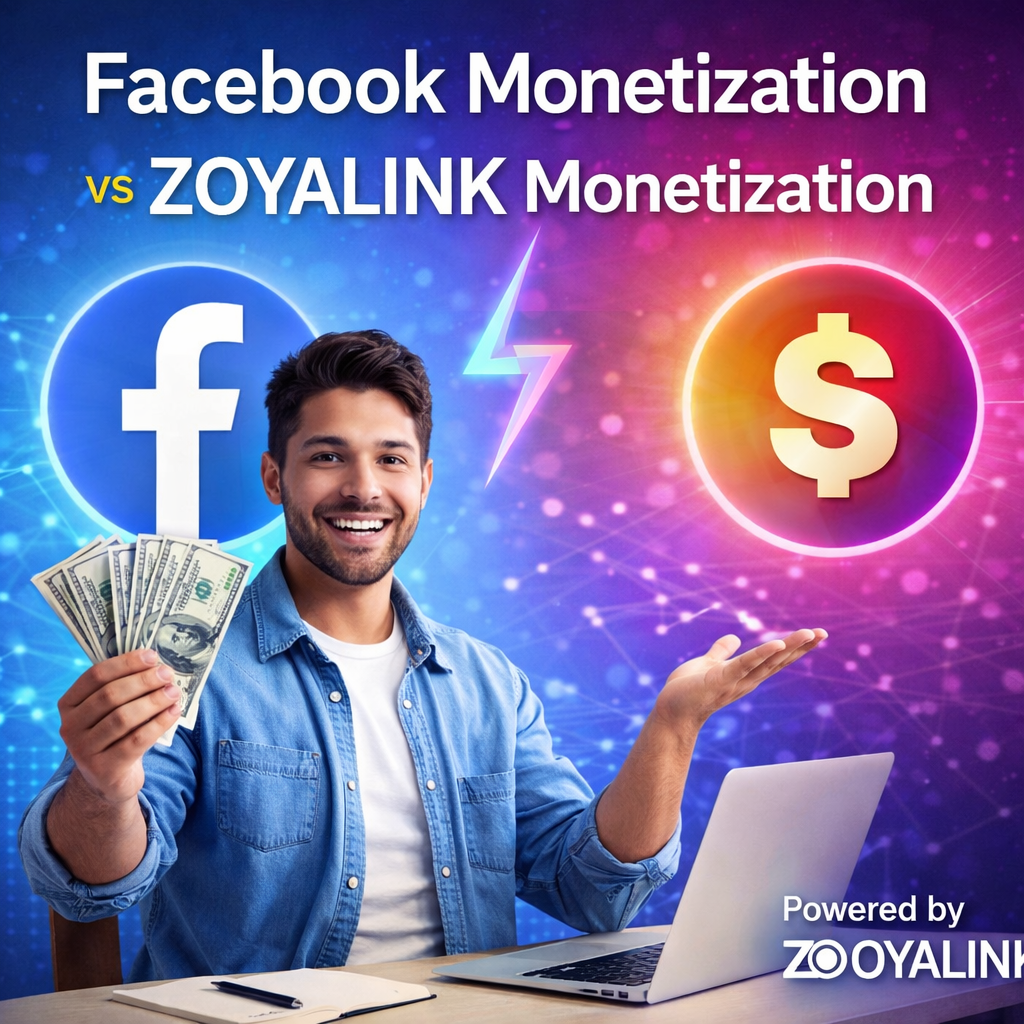
Key Differences Between Facebook and ZOYALINK
| Aspect | ZOYALINK | |
|---|---|---|
| Monetization Access | Requires eligibility | Available immediately |
| Algorithm Dependency | High | Low |
| Follower Requirement | Yes | No |
| Income Stability | Unpredictable | More controllable |
Which Platform Is Better for Creators?
Facebook is effective for reach and discovery but less reliable for stable income. ZOYALINK focuses on direct monetization, making it suitable as a primary income platform.
Many creators use Facebook to attract audiences and direct them to ZOYALINK for consistent monetization.
Conclusion
Facebook monetization offers opportunities but comes with limitations such as algorithm dependency and strict policies.
ZOYALINK provides a creator-centered alternative that emphasizes control, simplicity, and sustainable earnings.
Choosing the right monetization strategy depends on combining reach platforms with monetization-focused systems.