
Critical thinking is the ability to analyze information objectively before drawing conclusions or making decisions. This ability is increasingly important in the digital era because every day we receive so much information from the internet, social media, and various other sources.
 Continue ReadingWhy does promotional consistency often determine the growth of a business?
People who have critical thinking skills do not easily believe in information just because it is popular. They will look for facts, compare sources, and consider various points of view before forming an opinion.
The good news is that critical thinking is not an innate talent. This ability can be trained gradually through daily habits.
Why is Critical Thinking Important?
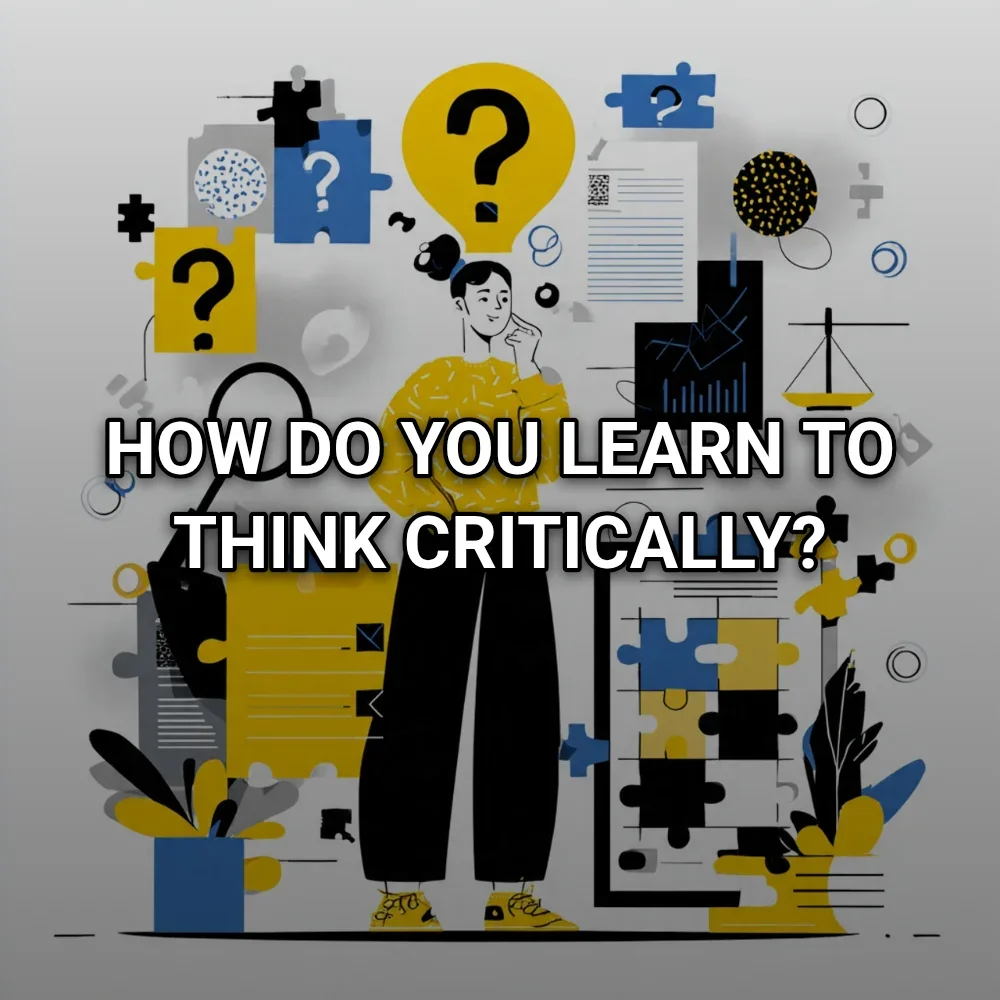
Critical thinking skills help someone make better decisions, solve problems effectively, and avoid mistakes due to inaccurate information.
Whether in the world of education, work, business or everyday life, this ability is a very valuable skill.
Don't immediately believe the information
Get used to not immediately accepting information as the truth.
Ask yourself where the information comes from, whether the source is reliable, and whether there is evidence to support the information.
Get in the habit of asking "Why?"
One simple way to practice critical thinking is to get used to asking questions.
Ask why something happened, what the process was, and whether there are other explanations that might make more sense.
Read from various sources
Don't rely on just one source of information.
Comparing several references can help see a problem from various points of view, resulting in a more complete understanding.
Separate Facts and Opinions
Facts are information that can be proven, while opinions are someone's opinion.
Understanding the differences between the two will help avoid jumping to conclusions.
Dare to Change Opinions
Critical thinking does not mean always defending your own opinion.
 Continue ReadingZoyalink Invites Creators to Share Original Content Through the Creator Program
If new, stronger evidence is discovered, don't hesitate to correct or change previous conclusions.
Practice Problem Solving Skills
Every time you face a problem, try to find several alternative solutions.
Compare the advantages and disadvantages of each before choosing the most appropriate decision.
Discussions with Others
Discussing can open new insights and help see an issue from a different perspective.
As long as it is done with mutual respect, discussion is an effective way to train critical thinking skills.
Reduce the habit of jumping to conclusions too quickly
Sometimes people jump to conclusions based on only partial information.
Get into the habit of collecting sufficient data before giving an assessment or making a decision.
Practice by Writing
Writing articles or summaries can help organize information logically.
This process trains the ability to analyze, compose arguments and express opinions in a structured manner.
Leverage Digital Platforms to Share Thoughts
After studying a topic, try sharing the results of your understanding in the form of articles or educational content.
ThroughZOYALINK, you can publish articles, images or videos that contain useful information. Apart from helping other people, this activity also trains the ability to think logically, communicate and organize arguments systematically.
Learn tooHow ZOYALINK WorksAndZOYALINK Creator Programto find out about the various features available to active creators.
Mistakes That Hinder Critical Thinking
- Immediately believe in information without checking the source.
- Only look for information that supports your own opinion.
- Reluctant to accept different opinions.
- Making decisions without sufficient data.
- Lack of reading and expanding horizons.
Conclusion
Critical thinking is a skill that anyone can learn. By getting used to asking questions, verifying information, reading from various sources, and being open to different points of view, critical thinking skills will continue to develop.
 Continue ReadingZoyalink Encourages Creators to Share Content on Social Media to Reach a Wider Audience
This ability not only helps in learning, but is also an important provision for making wiser decisions in the world of work, business and everyday life.